 Storywork
The learning opportunity
The story includes sudden bereavement. Select it with attention to learners’ recent experiences and keep reflection voluntary. Emphasize meaningful presence and appreciation without making someone responsible for preventing loss or regretting an ordinary missed meeting.
Learning goal
Students will reflect on the value of time, connection, and being present with the people they care about.
Competencies: Social Awareness, Relationship Skills, Self-Awareness, Responsible Decision-Making
Scott’s story
Most of my life growing up, my best friend was Kirk. We lived in the same town and spent most of our time together—riding bikes, having sleepovers, staying up late telling stories. We had our own little club called the Black Dragons, inspired by a TV show we both loved, Kung Fu, about a martial artist roaming the Old West.
Even after I moved away for high school, Kirk and I stayed connected. We ended up at the same college, graduated, and moved on to another college, still friends, still close. When I got married, Kirk stood as one of my groomsmen. He'd still come by late at night and talk with me and my wife, just like old times.
Kirk was working about an hour away from where we lived, but he often visited on weekends. One Sunday, he asked if we could hang out. I had other things going on and said, “Not today. Maybe later when we have more time.” He said, “Yeah, sure.”
That was the last time I ever saw Kirk.
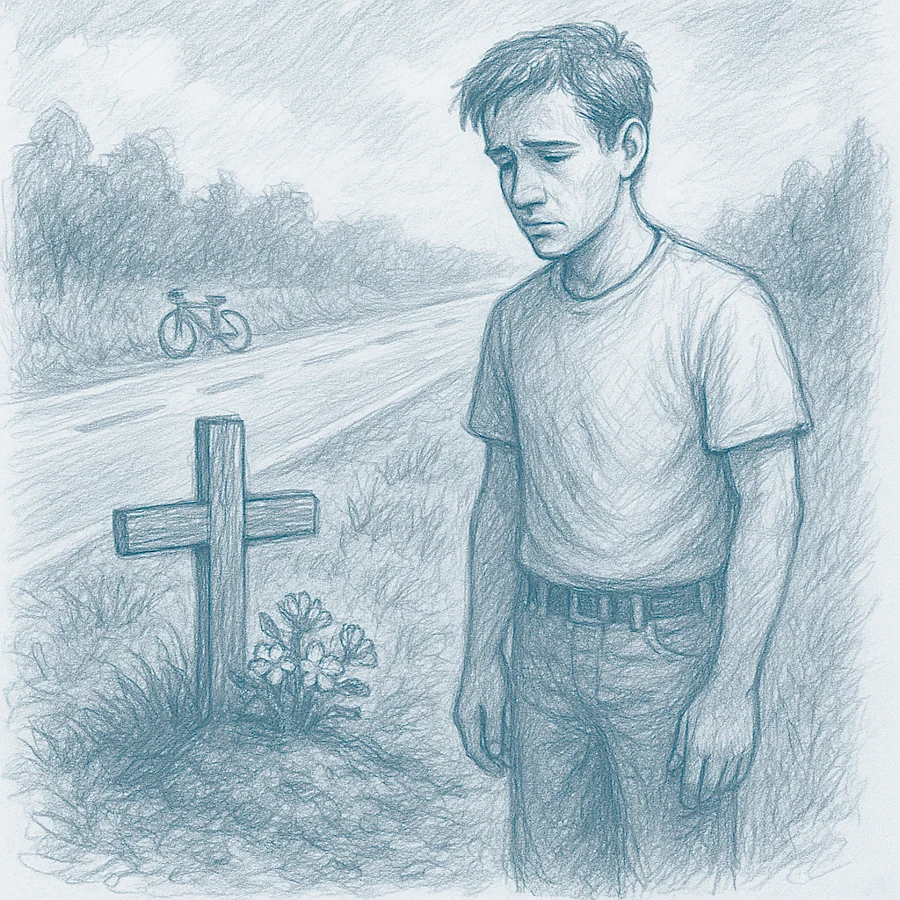
He had taken a new job as a counselor and was biking to a nearby town for his very first session. He didn’t have a car, and biking across country roads was his plan. It was early in the morning, and while he was riding, a man driving home from a night shift fell asleep at the wheel. He hit Kirk from behind. Kirk died on the spot.
I got the call from my mom while visiting my wife’s family. We rushed home. I stood at the roadside where Kirk had been hit. There were flowers. I thought about his excitement to help people. I thought about how we thought we had more time.
What I learned was this: we don’t always get another chance. Time with people we care about is a gift. Not because we should live in fear of loss, but because we should live in deep appreciation of the present.
It reminded me to be truly present with the people I love. To not let distractions or future worries keep me from showing up fully. Because being truly present is how we honor each other—and ourselves.
Step 2: Lesson Plan – "Presence and Appreciation"
Objective: Students will reflect on the value of time, connection, and being present with the people they care about.
Part 1: Discussing the Story (10–15 mins)
What made Kirk such an important friend?
Why did Scott regret saying, “Maybe later”?
What does this story teach us about presence and time?
Part 2: Moments that Matter (15–20 mins)
Students list 3 people they spend time with regularly and describe what they appreciate about each.
Reflect: What are ways we can be more fully present with them?
Part 3: Intentional Time Project (20 mins)
Students plan a simple, meaningful action they’ll do this week to be fully present with someone they care about.
Create a class display: “How We Show Up for Each Other.”
Spark, shutdown and reflection
Journal Prompts:
A Spark: When did you have a really meaningful time with someone?
A Shutdown: When did you miss a chance to connect and later regret it?
How can we be more intentional with our time and attention?
Sharing Options:
Memory circles: students share short stories about someone they’re grateful for
Optional letters: write to someone you appreciate (you can choose to give it or keep it private)
Ask students: "How do we make the most of the time we have with others? What does it mean to really be present in someone’s life?"
Companion guidance by Scott Simpson and Sharla Steever. Consult the book alongside these resources; activities and summaries do not replace the complete book.