 Storywork
The learning opportunity
This story includes bereavement and needs careful selection for the learners present. Focus on the forms of care people can offer and the value of asking what is wanted. Reflection can remain about the story or a fictional situation rather than a personal loss.
Learning goal
Students will understand the value of showing up for others during times of sadness, even when we don’t know what to say.
Competencies: Empathy, Compassion, Relationship Skills, Emotional Awareness
Sharla’s story
Teaching, especially at the elementary level, often brings us close to the families we serve. One such family for me was the Lopez family. That year, I had Maria Lopez in my class, and it was an exciting time—her mother was expecting a baby. Maria, so kind and hardworking, was thrilled at the thought of being a big sister and really hoped it would be a girl.
Throughout the year, Maria shared updates on her mom’s pregnancy, and the whole class felt like part of the anticipation. The big day arrived, and Maria’s mom went to the hospital. Around midday, the news came—it was a girl! Maria had a baby sister! We all celebrated in the classroom and began planning how to welcome her back.
But then, near the end of the day, my principal pulled me aside with a grave expression. “Sharla, there was a complication. Maria’s mom began bleeding after delivery… they couldn’t stop it. She passed away just moments ago.”
I was stunned. Everything inside me went numb. After school, I drove straight to the hospital. I didn’t know if it was the right thing to do, but I felt compelled to be there for Maria.
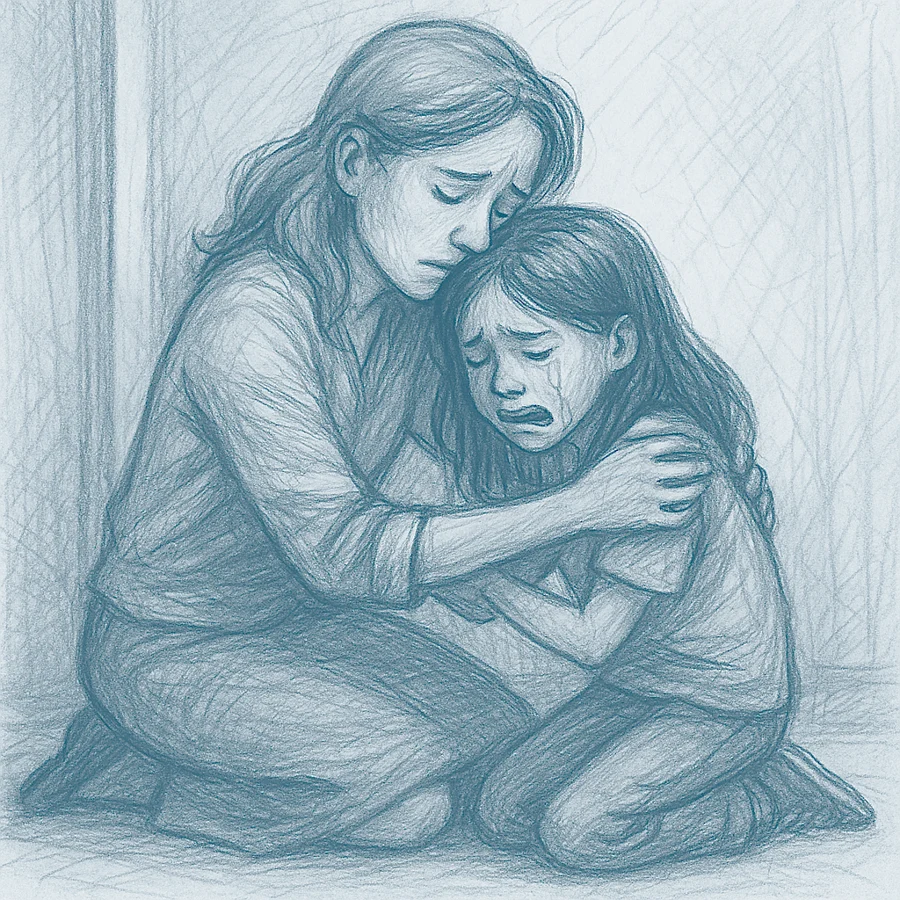
In a quiet space near the hospital room, I found Maria standing alone with her head down. “Maria?” I said softly. She looked up, and the tears began. I dropped to my knees and she wrapped her arms around me, sobbing deeply. I had no words—just presence. I held her and cried with her.
When the priest arrived to give last rites, the family invited me to join them. We stood hand-in-hand around the hospital bed, praying and grieving. It was a moment of both profound sadness and the bittersweet joy of a new baby.
That day taught me something important: we don’t always need the perfect words—we just need to show up. I continued to do so in small ways: bringing stuffed animals to the funeral, checking in with Maria’s father, and being there for Maria each day—with hugs, quiet moments, and a listening ear.
More than 15 years later, I still carry that memory. Our students truly become part of our hearts.
Step 2: Lesson Plan Theme
Theme: Empathy and the Power of Presence Goal: Students will understand the value of showing up for others during times of sadness, even when we don’t know what to say. Classroom Discussion Prompts:
How do you think Maria felt when her teacher came to the hospital?
What does it mean to “just be there” for someone?
Why is presence more important than having the right words?
How can you support a friend who is going through something hard?
Spark, shutdown and reflection
Spark Story Prompt:
Tell about a time when someone’s simple presence made a hard situation feel more bearable.
Shutdown Story Prompt:
Have you ever felt alone during a difficult moment? What would have helped?
Sharing Activities:
In pairs or small groups, take turns telling a “spark” or “shutdown” story. Practice deep listening.
As a class, make a “Presence Wall” where students post quotes or drawings showing what it means to truly be there for someone.
When someone is going through something hard, what helps more: saying the right thing or simply being there—and why?
Companion guidance by Scott Simpson and Sharla Steever. Consult the book alongside these resources; activities and summaries do not replace the complete book.