 Storywork
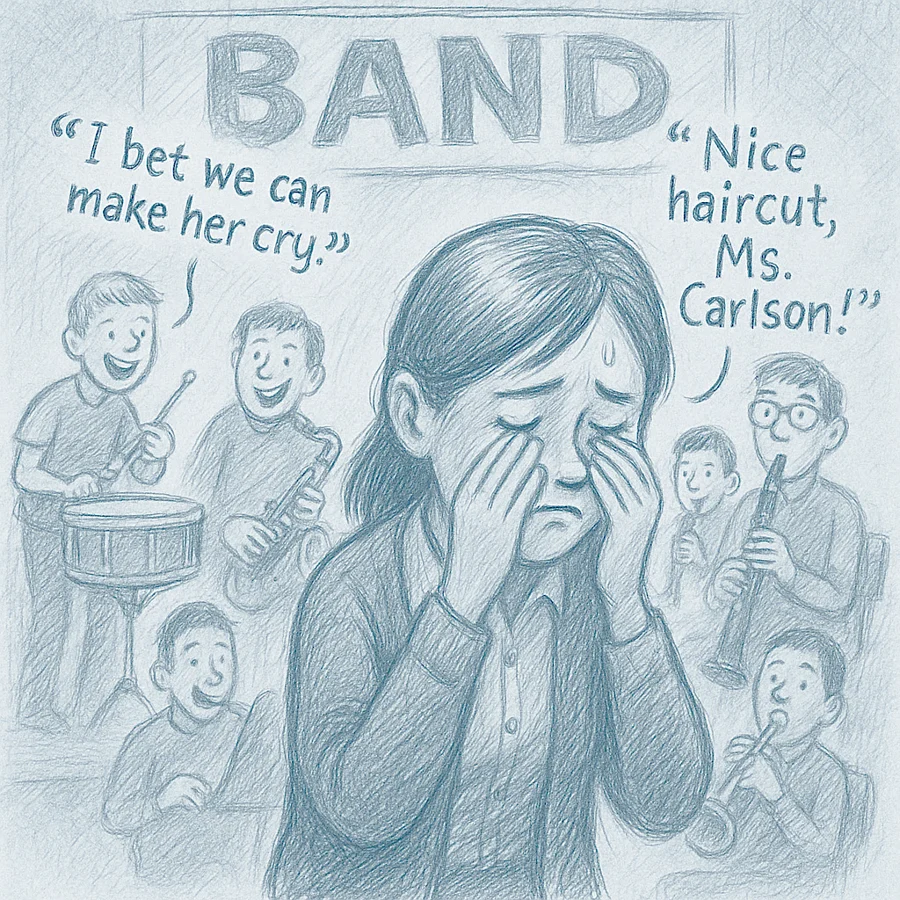
The learning opportunity
The unit makes group influence visible. Invite learners to examine what a shared atmosphere needs from everyone while retaining adults’ responsibility for the learning environment. Ask how peer leadership, empathy, and accountability could change the pattern.
Learning goal
Students will reflect on how their behavior can influence a classroom environment and explore the role of empathy and leadership in student-teacher relationships.
Competencies: Social Awareness, Relationship Skills, Self-Awareness, Responsible Decision-Making
Scott’s story
When I was in middle school, I was a drummer in the school band. We had around 35 or 40 members, and all the percussionists stood in the back. Drummers love to tap and pound out rhythms, and we weren’t always good at staying quiet when we were supposed to be.
Over time, we had several different band directors. One of them was Ms. Carlson. She was young and clearly passionate about music and teaching. You could see it in her eyes and hear it in her voice. But she was also easy to upset. Her bottom lip would quiver when things started to go wrong, and we all noticed it.
Instead of supporting her, some of us made her emotional vulnerability into a game. Some boys in the band, who probably had crushes on her, decided to see how fast they could make her cry. It was cruel, but they turned it into a contest. One guy said he could do it in ten minutes. Another said seven. Then someone said two.
So the day came, and we tested her.
Ms. Carlson came in, smiling like always. She greeted us and started rehearsal. But the comments began. Sarcasm. Jokes. Disruptions. Snide remarks about her appearance. I was part of the group that was laughing and whispering.
And then I saw her lip quiver. Her eyes filled. That moment hit me hard. I remembered how my own mom—a teacher—would sometimes come home from school drained because her students had been disrespectful. I thought of Ms. Carlson—I didn’t know if she had anyone to come home to, or how hard her day had already been. But we were making it worse.
Sure enough, within two minutes, she put her face in her hands and ran out crying. She went to the office. The principal came in later and gave us a harsh lecture. But Ms. Carlson never came back.
She was replaced by a grumpy man who barked orders and never smiled. And the classroom never felt the same again.
That experience stayed with me. I learned that students have power. The power to make a teacher’s life harder—or better. We can bring out the worst in a teacher, or the best. That power matters, and I’ve never forgotten it.
Step 2: Lesson Plan – "The Power Students Hold"
Objective: Students will reflect on how their behavior can influence a classroom environment and explore the role of empathy and leadership in student-teacher relationships.
Part 1: Discussing the Story (10–15 mins)
Why do you think some students treated Ms. Carlson the way they did?
What was the turning point for Scott?
How did the class environment change after she left?
Part 2: Power and Responsibility (15–20 mins)
Brainstorm: What kinds of power do students have in the classroom?
Discuss: What does it mean to use that power responsibly?
Part 3: Creating a Classroom Charter (20 mins)
In small groups, students design a "student power pledge": how they will use their influence to support teachers and classmates.
Share pledges and discuss common themes.
Spark, shutdown and reflection
Journal Prompts:
A Spark: When did something you said or did uplift someone else?
A Shutdown: When do you think your actions may have hurt someone, even unintentionally?
What would you do differently if you could go back?
Sharing Options:
Roleplay: Share scenarios of classroom challenges and brainstorm kind responses.
Anchor art: Draw a visual showing student power lifting a teacher up.
Ask students: "What kind of classroom do we want to build? How can our choices help our teachers feel supported, not stressed?"
Companion guidance by Scott Simpson and Sharla Steever. Consult the book alongside these resources; activities and summaries do not replace the complete book.